Digital Product Passport Summit: Why companies need to access their data now
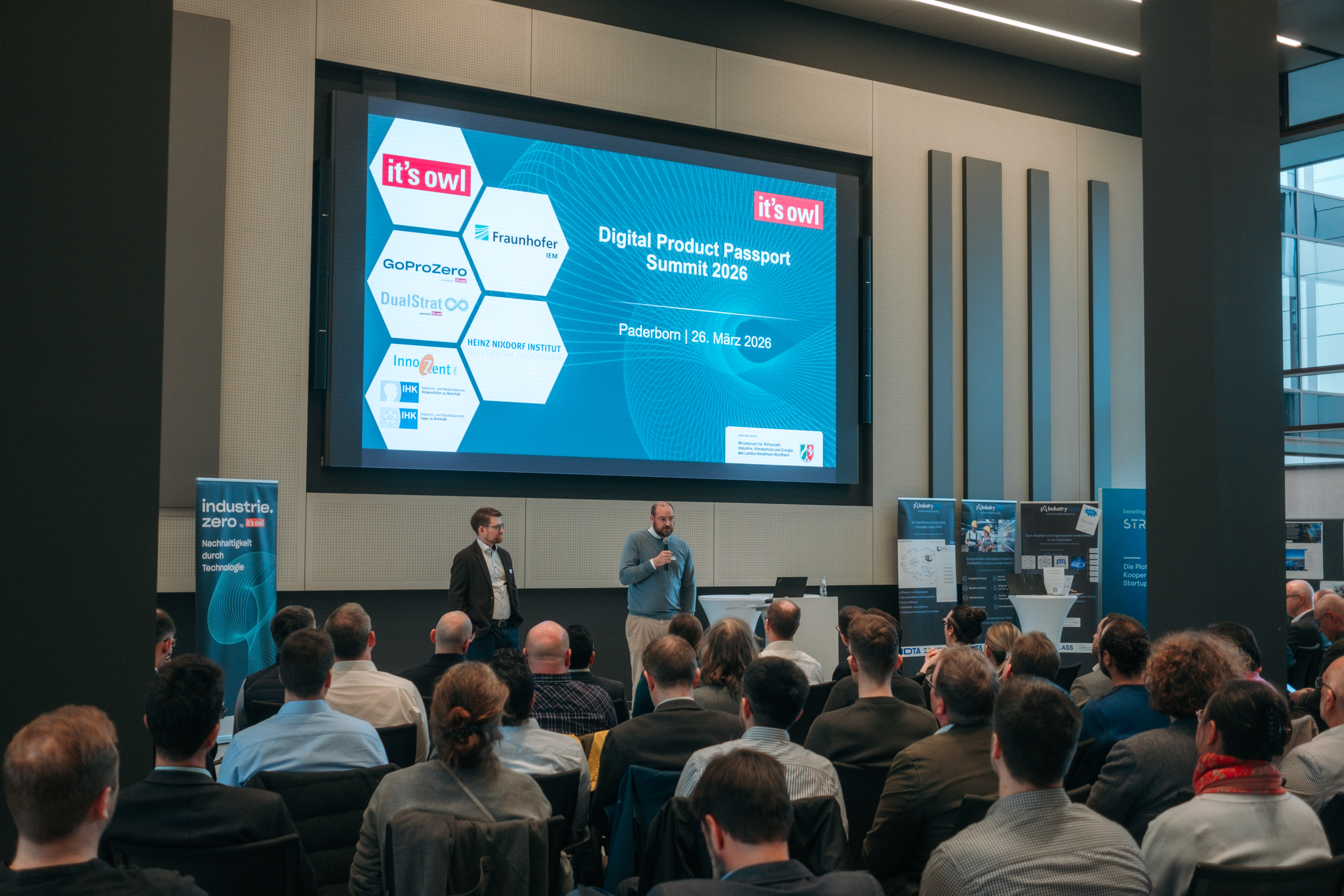
Customers are already requesting sustainability data today, tenders require reliable evidence and in many companies the necessary information is still stored in various systems, departments and Excel spreadsheets. The digital product passport is no longer just an issue for regulators and sustainability reports. It is becoming a practical task for sales, service, development and IT. This was demonstrated at the Digital Product Passport Summit in Paderborn.
At WAGO, the Minden-based provider of connection and automation technology, this pressure has already become part of day-to-day business. Alexander Flekler, Circular Economy Manager at WAGO, puts it in a nutshell: “Our customers are demanding sustainability data now. Or better yet, yesterday.”
For WAGO, the digital product passport is therefore not just a regulatory issue, but has long been a business case. The company no longer just provides product data as a PDF, but in such a way that other systems can process it directly.
This is a challenge that extends far beyond individual industries. In future, companies will have to create product information in such a way that customers, partners and software systems can use it quickly. Dr. Christian Koldewey, project coordinator of the it’s OWL project GoProZero from the Heinz Nixdorf Institute at Paderborn University, sums it up as follows: “The digital product passport is no longer just a compliance issue, it has become a strategic issue. The digital product passport is effectively the digital infrastructure for the sustainable economy.”
Those who structure their product data properly create the basis for traceability, recycling, new services and reliable proof of sustainability.

From data set to data task
Dr. Holger Berg from the Wuppertal Institute, which conducts research into sustainable transformation and the circular economy, explains why the topic is changing so much. “The digital product passport is no longer just a data set, but a digital container for product, material and component-related information.” There is a simple idea behind the term: in future, it will no longer be enough to collect individual details on request. Companies must organize data on materials, carbon footprint, origin, repair or disposal in such a way that it remains available over the entire life cycle of a product.
This turns a regulatory issue into a management task. Berg therefore recommends that companies do not wait and see. Anyone affected by the DPP should check now what data is already available, where there are gaps and how their own data management is set up. This is particularly crucial for SMEs, as they often lack not the insight, but the time and personnel capacity to set up the issue properly later under pressure.

Without common rules, the effort increases
As soon as companies sort their data, they come up against the next hurdle: standards. Sebastian Schröder from the German Commission for Electrical, Electronic & Information Technologies describes the task of standardization as follows: “We try to capture the whole thing in such a way that the standards and regulations are designed as uniformly as possible for the companies.” There is a very practical goal behind this. If every industry uses different terms, formats and data models, the workload for companies continues to grow. Standards should prevent precisely this and keep bureaucracy manageable.
The question of principle quickly becomes a question of implementation. Stefan Schork from ZVEI, the German Electrical and Electronic Manufacturers’ Association, says that companies are most likely to be convinced if pilot projects show “that the digital availability of data really makes a difference, ideally also on the business side”. The benefits must be visible in everyday life, not just in the regulation.
Data rooms should make supply chains easier
As soon as information has to be exchanged across many partners, standards alone are no longer enough. The technical infrastructure then comes to the fore. In this context, Ulrich Ahle, Managing Director of Gaia-X, refers to data rooms as an important foundation.
This refers to digital environments in which companies can exchange data securely and according to common rules. “Data rooms help to fulfill the requirements that come from digital product passports much more easily than we can with traditional technologies,” says Ahle. This is particularly important in supply chains with many participants so that information does not have to be recorded multiple times, sent by email or reprocessed in every system.
There is something else that counts for companies. The DPP is first and foremost a regulatory instrument. But its impact goes deeper. When companies restructure data, clarify responsibilities and make information usable across company boundaries, this not only changes documentation, but also entire processes in the value chain.

In practice, the DPP often starts smaller than expected
The example of Böllhoff shows how companies can make a practical start. The Bielefeld-based family business develops and produces fasteners, assembly technology and processing systems for industry. The work there does not start with a large platform, but with an inventory: what data will be needed in the future, where is it already available and where are processes missing? The company then focuses initially on a small number of products, builds up a data catalog and uses it to implement an initial prototype. “It’s important to start early, start small and organize your own data first,” says Dr. Caroline Besse, Material Data and Compliance Manager at Böllhoff.
The benefit for Böllhoff is not only in the subsequent fulfillment of obligations. Once the information is bundled, inquiries can be answered more quickly, the sales department is relieved and hotspots in the product carbon footprint can be identified earlier. The DPP thus becomes a tool for everyday use, not just for reporting to authorities or customers.
The digital product passport is not just a must, but an opportunity.
Dr. Mathias Wöhler, Kannegiesser.
Kannegiesser is also focusing on a pragmatic approach. The plant manufacturer from Vlotho, which specializes in industrial laundry technology, combines the topic with the digital twin and with data from ongoing operations. “The digital product passport is not just a must, but an opportunity,” says Dr. Mathias Wöhler from Kannegiesser. This information flows back into design and service. The DPP not only helps with documentation, but also with identifying anomalies earlier, selecting components better and preparing new business models.

A QR code alone does not solve the problem
The technical implementation at the latest shows how challenging the topic actually is. According to Christopher Edwards from Spherity, a solution provider for digital identities and product data, many companies underestimate the effort involved because it initially seems easy to get started: Pull data from existing systems, generate a QR code, done. “Unfortunately, the reality is a little different.” In his view, the digital product passport is a “living construct” with dynamic data and ongoing updates. Products are used, maintained, resold or used differently. The DPP must be able to reliably map such changes.
For companies, the most important insight is therefore not to be found in Brussels, but in-house. The digital product passport does not begin with the QR code at the end of the process. It begins where data is currently distributed, responsibilities are unclear and customers still expect fast, reliable information. If you start early, you not only create more security for future obligations. It also improves market access, transparency and the basis for new services. This is precisely what turns the DPP from a regulatory issue into a competitive issue.
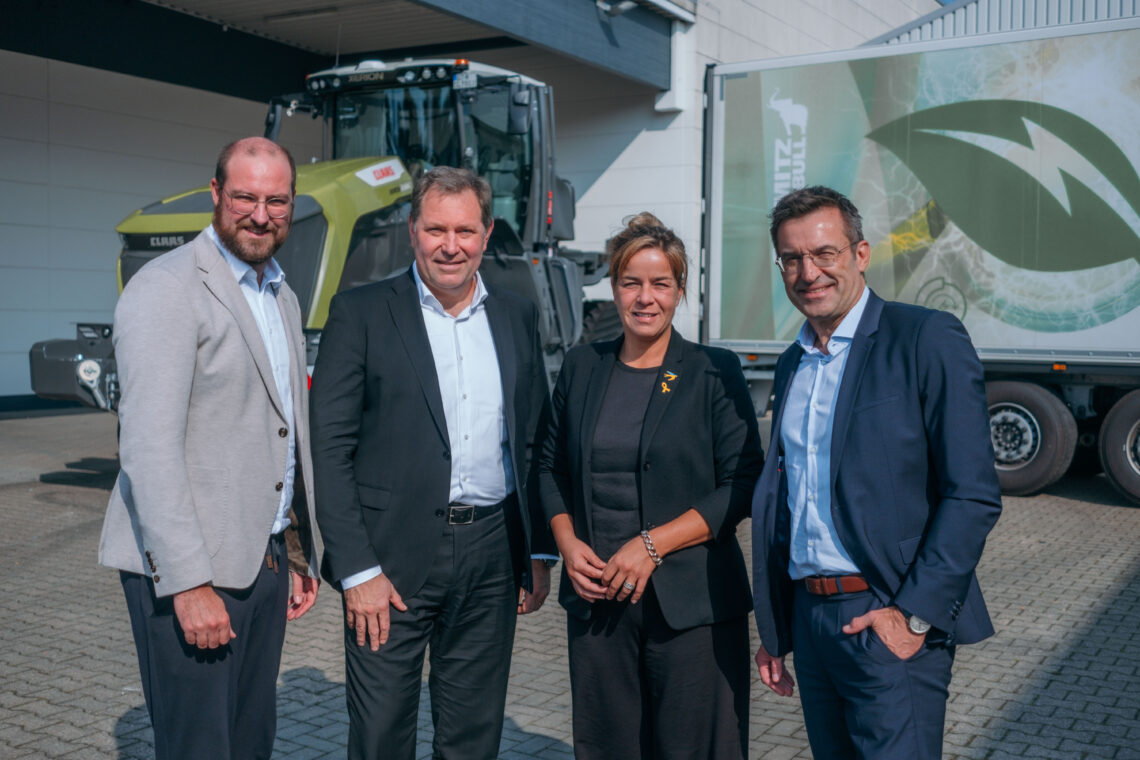
Impressions from the Digital Product Passport Summit 2026