Vocational school for robots? How it’s OWL combines humanoid robotics, AI and new markets
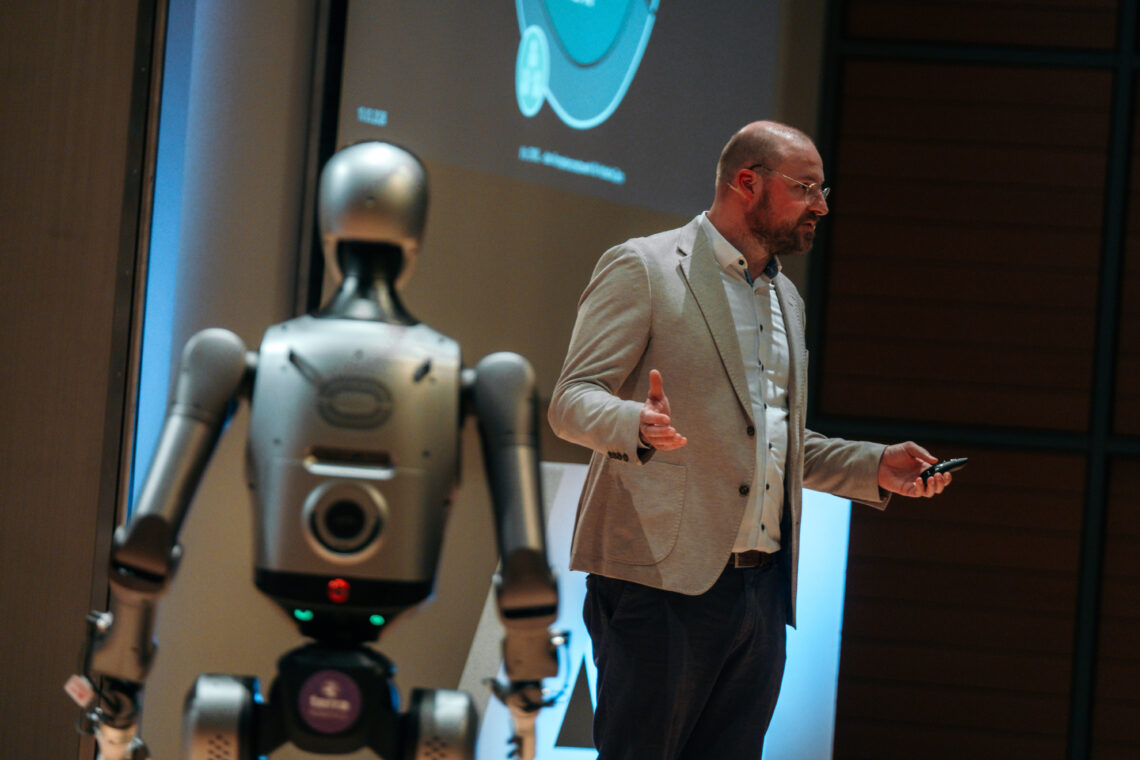
Humanoid robots walk, dance and make viral videos. In industry, however, their value is not decided on stage, but in assembly, warehouse logistics and production. At the it’s OWL strategy conference, it became clear that for many companies in OstWestfalenLippe, humanoid robotics is no longer a distant hype, but a topic that companies in the region are dealing with. This is exactly where it’s OWL is now starting and is planning a “joint vocational school for robots”.
Does every company really need to purchase its own expensive and still immature humanoid robots to gain initial experience? Not from it’s OWL’s point of view. Dr. Arno Kühn, Head of Strategy at it’s OWL, outlined a shared approach instead. Companies should develop devices, knowledge and, above all, use cases together.
His image: a “joint vocational school for robots”. The new trend topic poses a number of challenges that companies do not have to face alone. “The reality is that the devices are still a little shaky. This is precisely why it makes sense to join forces, test such systems together and develop use cases across companies,” says Dr. Arno Kühn, Head of Strategy at it’s OWL.
Robots would be trained together for tasks that are similar in many companies, such as pre-assembly or warehouse logistics. In this way, the robots not only learn new skills, but the companies also learn from each other. Eight companies are already on board.
Robotics as a future topic for OWL
“It makes no sense for us to purchase a humanoid robot on our own that is not yet running any software and therefore can’t do very much. It makes much more sense to work on it together in a network. This is interesting for us because it allows us to improve processes and because we need to further develop our products so that they can be processed automatically,” says Dr. Jens Bunte from the Böllhof management team.
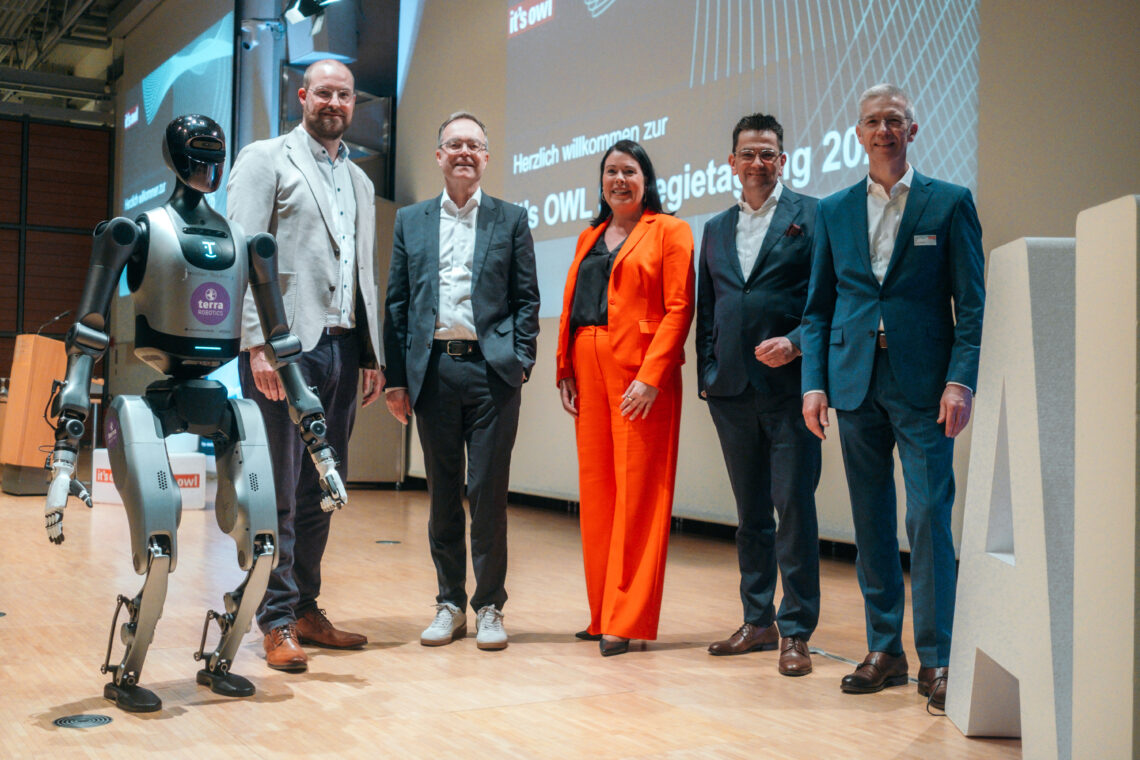
Dr. Stefan Breit, Managing Director of Miele and Chairman of the Cluster Board, is also certain: “Robotics is a topic of the future for OWL. Against the backdrop of increasing automation and a shortage of skilled workers, this is a major growth market, especially for automation and mechanical engineering. However, many developments are taking place outside of Europe. Here it is even more important to join forces and work together at it’s OWL.”
Industrial renaissance: futurologist Jan Berger calls for new markets instead of old certainties
Behind the robot debate was a larger question: how can companies secure their ability to act in a world in which old certainties are disappearing and new technologies such as AI and robotics are entering the market at a rapid pace?
Dr. Jan Berger, founder and Managing Director of Themis Foresight, described this situation as the beginning of an “industrial renaissance”.
According to Berger, the years between 1995 and 2020 were characterized by cheap energy from Russia, cheap goods from China, cheap security from the USA and cheap loans from central banks. These conditions no longer exist today. He did not derive a retreat from this, but rather a mission. For companies, it is about future design options and not just observing new markets, but actively thinking about them.
For Berger, there is a clear vision for the future of German and European companies: “We want to be a global technology leader. We want to close material cycles and not factories. And we don’t want to grumble, we want to get on with it.”
AI is changing the rules of the game: Why Agentic AI is becoming relevant for SMEs
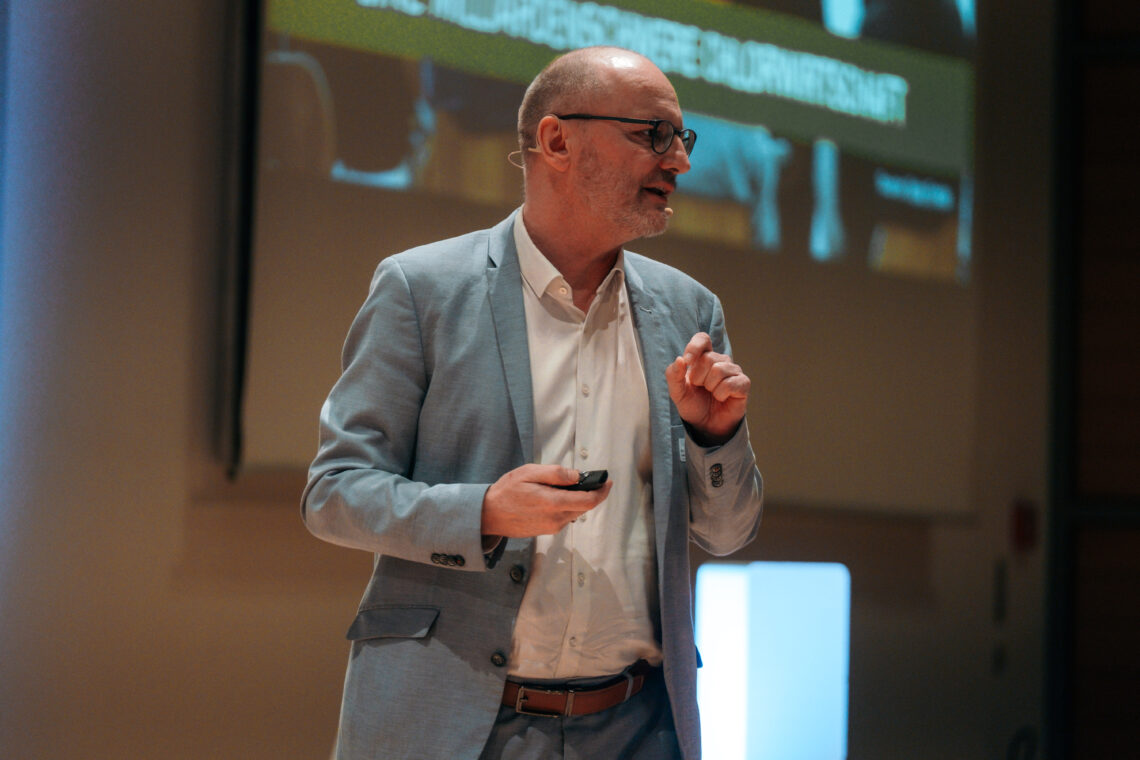
To achieve this, many companies are already relying on artificial intelligence. Stefan Breit, Managing Director of Miele and Chairman of the Cluster Board, made it clear right at the start of the strategy conference how quickly the topic is developing in companies. A year ago, many companies had only just begun to understand what is possible with generative AI. Now it is already about agentic AI and the question of how this dynamic can be combined with products, processes and people in the companies in OWL.
Breit combined this idea with a clear mandate for the region. AI must be used more to optimize processes and develop new business models. He sees great potential for engineering in particular.
50,000 start-ups scouted and 150 collaborations implemented: Stratosfare as an it’s OWL success story
In addition to the ongoing AI projects, it’s OWL is sticking to its DNA of intelligent technical systems, but is shifting the focus towards joint testing, shared infrastructure and faster application. One example of this is the work of the it’s OWL initiative Stratosfare, where established companies benefit from startup technologies.
More than 50,000 start-ups have already been viewed there and over 150 collaborations have been implemented. Humanoid robotics has emerged as a new field from this shared services concept.
Skilled workers, transfer, speed: what SMEs really need now
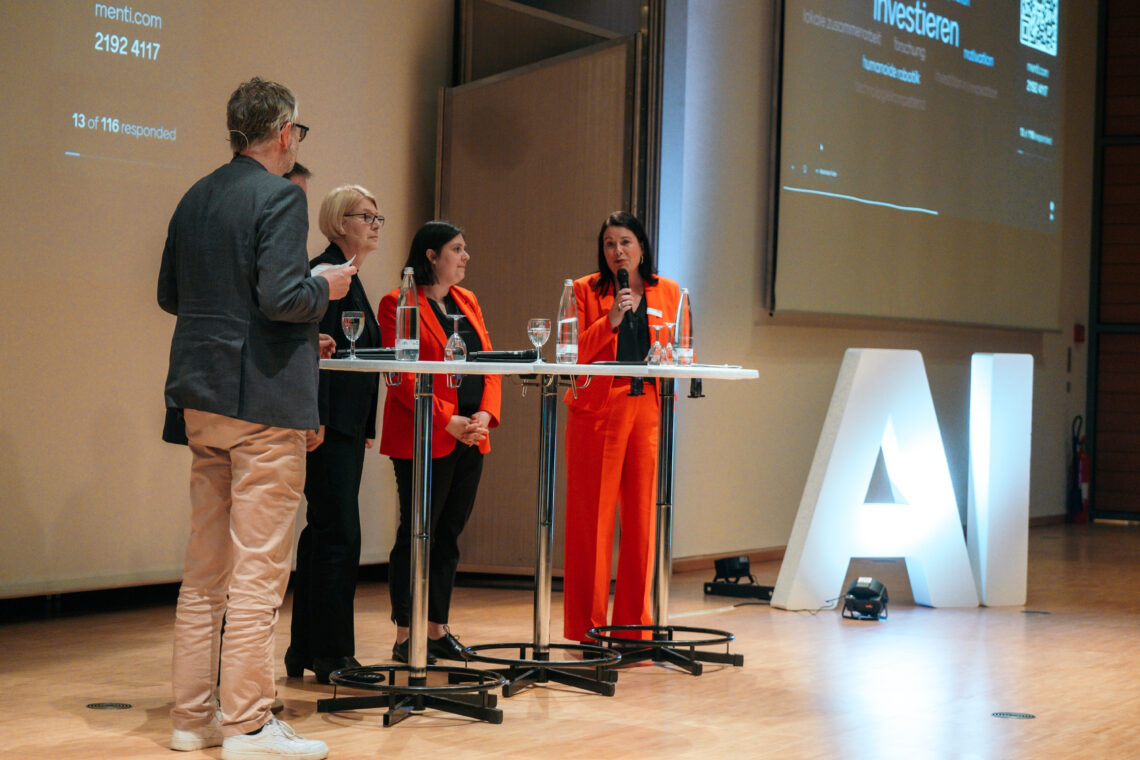
Finally, the panel talk showed that companies see the situation more broadly than just through technology glasses.
Sabine Brockschnieder, Managing Director of Bauformat Küchen, made it clear that new technologies alone are not enough. For her, innovative strength and competitiveness depend above all on whether the region attracts and retains good skilled workers.
Dr. Mareen Tack, Vice President at WAGO, described innovation as a joint effort. It is created where people are passionate about a topic and the right partners come together, both internally and externally.
Ingeborg Schramm-Wölk (President of Bielefeld University of Applied Sciences and Chairwoman of Campus OWL) made it clear that universities have long been more than just training centers for companies. The universities are developing new competence profiles, rebuilding their own structures and want to work closely with industry as reliable transfer partners.
Günter Korder condensed this into a clear mission at the end. “Curiosity is an important prerequisite for innovation. We need to tackle new topics earlier, try out technologies such as humanoid robotics at an early stage and at the same time be more courageous when it comes to riskier projects. Especially when it comes to AI, we should be faster and sometimes more radical.”
All presentations in Re-Live for re-watching
Contact us